Whole-home structural tent fumigation serves as the decisive structural rescue when drywood termite colonies (Cryptotermes brevis) disperse into inaccessible structural joists, wall plates, tongue-and-groove ceilings,…
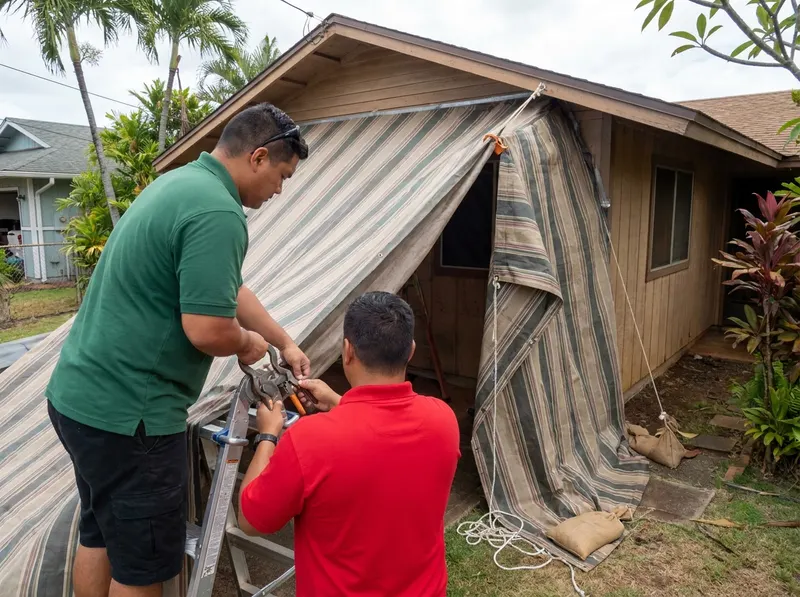
Whole-home structural tent fumigation serves as the decisive structural rescue when drywood termite colonies (Cryptotermes brevis) disperse into inaccessible structural joists, wall plates, tongue-and-groove ceilings, and roof trusses across Honolulu County. While spot-treatments or orange oil injections treat localized infestations within reachable wall cavities, structural fumigation penetrates the core density of all timber framing simultaneously. The process does not require recurring long-term chemical subscription contracts, providing an immediate resolution for homeowners facing structural anxiety in historic Douglas fir and redwood homes.
Microclimate factors dictate strict fumigation prep across urban and valley Honolulu. In windward-adjacent or high-moisture valley corridors such as Manoa and Nuuanu, damp soil profiles and perimeter vegetation require heavy watering prior to tarp placement. Saturating the soil 12 to 18 inches outward from the building foundation creates a dense moisture seal that prevents the heavier-than-air fumigant gas from leaking downward into the subsoil. In higher wind velocity neighborhoods like Kaimuki, Makiki, and Aina Haina, tarp crews use heavy clamp sequences and double-weighted sand snakes to hold tarp seams firmly against sudden trades sweeping over Punchbowl Crater or down the Koolau ridges.
Structural execution follows strict regulatory thresholds monitored through specialized low-ppm gas detection clearing instruments. Step 1: Technicians measure the precise interior cubic footage, calculating the required dosage based on the structural volume, ambient temperature, and wind speed. Step 2: Polyvinyl-coated nylon tarps are hoisted, sealed along the ridge lines with specialized clamps, and weighted along the foundation with continuous rows of heavy water bags or sand snakes. Step 3: Gas is introduced through calibrated release hoses with circulation fans distributing the fumigant into all concealed framing spaces. Step 4: After a 24-hour retention period, tarps are removed, venting the property until clearance instruments verify gas levels register at or below 1 part per million (ppm), allowing safe re-entry without chemical residues on home furnishings.
Every job gets a firm, written price after a free on-site visit.
Tell us about your whole-home structural tent fumigation job in Honolulu and we'll send a clear, written quote, usually the same day.
 Cadrin Bug Removal